

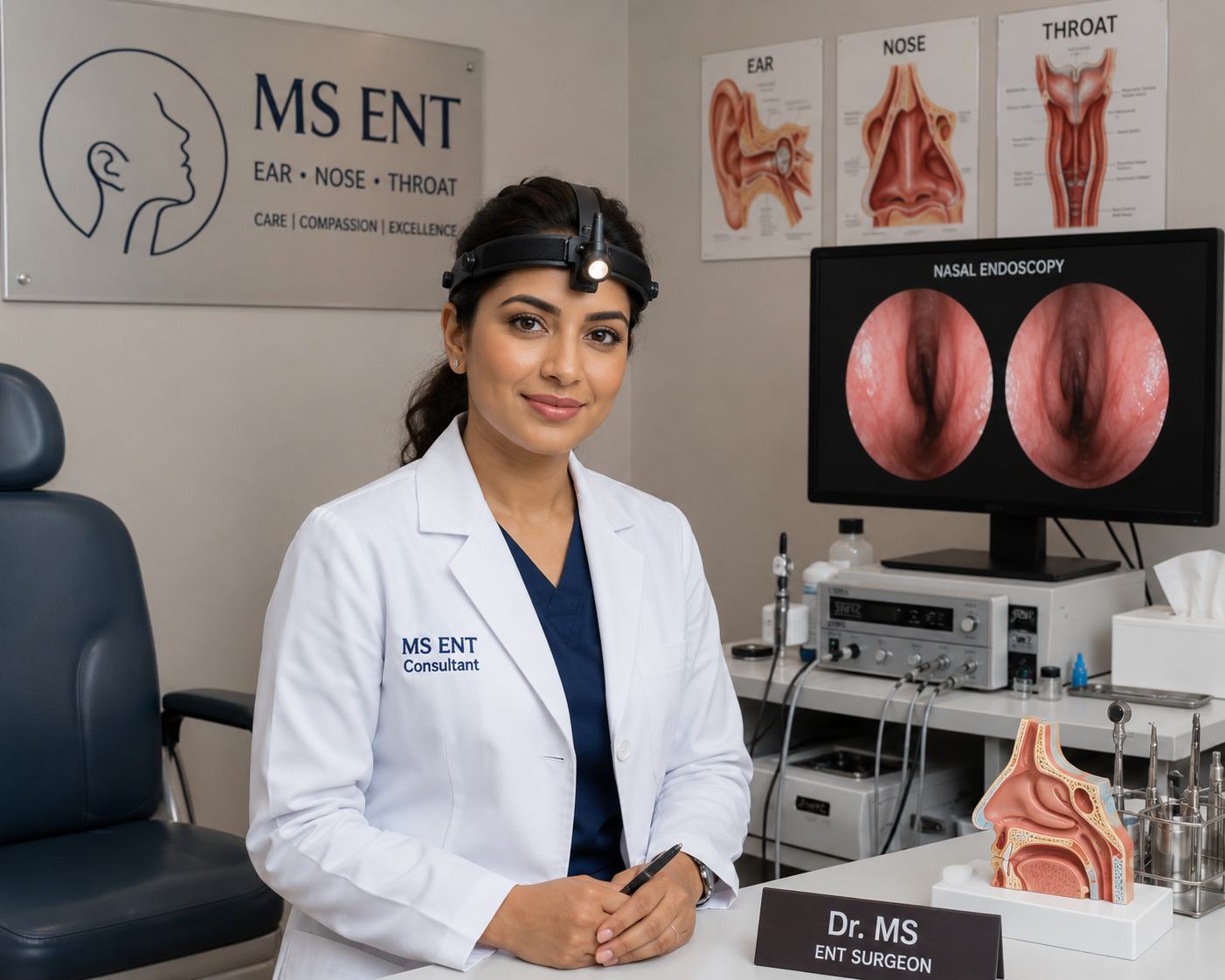
Direct MS ENT Admission 2026: The Ultimate Guide to Fees, Seat Matrix, and NRI Quota
Among surgical disciplines, MS ENT (Otorhinolaryngology) occupies a highly strategic sweet spot. It offers the adrenaline of intricate micro-surgeries (like cochlear implants and endoscopic sinus surgeries) combined with the heavily predictable, high-volume OPD practice of a medical branch. With the recent rise in complex head and neck oncological surgeries and advanced otology, MS ENT has transformed into a highly lucrative, premier surgical specialty.
Because government seats for MS ENT require a fiercely competitive All India Rank (AIR), thousands of candidates pivot to the private sector. If you have the financial bandwidth but missed the stringent government cutoffs, Direct MS ENT Admission through the Management and NRI quotas provides a legally sanctioned, highly strategic pathway to secure your surgical residency.
However, a critical legal reality must be established immediately: There is no “backdoor” entry into any Indian medical residency. Securing a paid seat requires you to qualify for NEET PG and actively participate in the official Medical Counselling Committee (MCC) or State Directorate of Medical Education (DME) centralised counselling rounds. Any agent promising direct admission outside of this digital portal is running a fraudulent scheme.
Here is your exhaustive, data-backed guide to navigating the 2026 MS ENT admission matrix, complete with verified fee structures, expected ROI, and strict NRI sponsorship strategies.
1. Why MS ENT? (ROI and Lifestyle Prioritisation)
When investing heavily in a management quota seat, you must evaluate the long-term Return on Investment (ROI) and the lifestyle implications of the branch. MS ENT is unique because it bridges the gap between major surgery and day-care procedures.
-
The Micro-Surgical & Day-Care Advantage: Unlike General Surgery or Orthopaedics, which require massive inpatient hospital infrastructure, many ENT procedures (tympanoplasty, FESS, septoplasty) are day-care surgeries. This means you can establish an independent surgical practice with significantly less upfront capital.
-
Super-Specialty (MCh) Pathways: While MS ENT is a fantastic terminal degree for independent practice, it also opens the door to highly respected MCh programs in Head & Neck Surgery and Endocrine Surgery.
-
Expected Starting Salary (Post-PG): ₹1 Lakh to ₹2 Lakhs per month as a junior consultant in corporate hospitals. However, independent ENT surgeons who integrate allergy testing, hearing aid dispensing, and vertigo clinics often scale their private practice revenue to ₹3 Lakhs – ₹5 Lakhs+ per month rapidly.
-
Prioritization Insight: If you want the prestige of being a surgeon but prefer precise, bloodless micro-surgical fields over the physical exhaustion of massive trauma surgeries, ENT is mathematically and practically the best choice.
2. The Seat Matrix: Deemed Universities vs. State Private Colleges
To execute a flawless choice-filling strategy, you need to understand where the paid seats are located. India currently offers roughly 2,150+ MS ENT seats. The paid seats in the private sector are divided into two distinct categories:
A. Deemed Universities (100% All India Access)
-
Counseling Authority: Medical Counselling Committee (MCC) via
mcc.nic.in. -
Access: Open to all NEET PG qualified students across India. State domicile is completely irrelevant.
-
Quota Split: 85% Management Quota / 15% NRI Quota.
-
Strategic Advantage: Deemed Universities boast state-of-the-art temporal bone labs and advanced audiology departments. Because ENT sits slightly below OBG and Ortho in upfront demand, the management fees in Deemed Universities are significantly more affordable (often ₹20 Lakhs to ₹26 Lakhs/year).
B. State Private Colleges (Domicile Dependent)
-
Counselling Authority: Individual State Directorates of Medical Education (DME).
-
“Open” States: States like Uttar Pradesh, Karnataka, Rajasthan, and Haryana allow non-domicile students from anywhere in India to bid for their management seats. For instance, private colleges in UP often cap MS ENT fees at a highly affordable ₹14 Lakhs to ₹20 Lakhs per year.
-
“Closed” States: States like Maharashtra, Gujarat, and Madhya Pradesh strictly reserve their private college management seats for local domicile students.
3. Deep-Knowledge Fee Matrix: Top Deemed Universities (2025–2026 Data)
Locking in a choice during counselling that aligns precisely with your budget is critical. If you are allotted a high-fee seat that you cannot afford, resigning it results in the immediate forfeiture of your ₹2 Lakh security deposit.
Here is the verified fee data for MS ENT across major Deemed Universities for the current academic cycle:
| Deemed University | Estimated Management Fee (Per Year) | Monthly Stipend (Approx) |
| SRM Medical College & Research Institute, Chennai | ₹ 30,00,000 | ₹ 35,000 |
| Kasturba Medical College (KMC), Manipal / Mangalore | ₹ 26,50,000 | ₹ 45,000 |
| Amrita School of Medical Sciences, Kochi | ₹ 26,00,000 | ₹ 43,000 |
| Hamdard Institute of Medical Sciences, New Delhi | ₹ 25,00,000 | ₹ 80,000 |
| SBKS Med. Inst. & Research Centre, Vadodara | ₹ 24,20,000 | ₹ 84,000 |
| Bharati Vidyapeeth Deemed University, Sangli | ₹ 23,15,250 | ₹ 53,957 |
| JSS Medical College, Mysore | ₹ 22,00,000 | ₹ 45,000 |
| Kalinga IMS, Bhubaneswar | ₹ 21,00,000 | ₹ 70,000 |
Note: Tuition fees are strictly charged for 3 years. Notice the massive disparity in stipends; institutes like Hamdard and SBKS pay significantly higher stipends, which drastically reduces the “true” total cost of your residency.
4. Securing MS ENT via the NRI Quota
If your NEET PG rank is critically low—meaning you barely crossed the 50th percentile qualifying mark—but you have strong international financial backing, the NRI quota guarantees a pathway to premium institutions without facing the brutal management merit list. 15% of all Deemed University seats are ring-fenced for this category.
For MS ENT, the NRI fees typically range from $50,000 to $70,000 per year, depending on the institution.
Strict Sponsorship Rules
The National Medical Commission (NMC) rigidly controls who can sponsor an NRI seat to prevent domestic financial laundering. You cannot be sponsored by a family friend. Acceptable sponsors strictly include a First-Degree Blood Relative:
-
Parents (Father or Mother)
-
Real Siblings (Brother or Sister)
-
Paternal or Maternal Uncle/Aunt (Blood relations only)
-
First Cousins
-
Spouse
Mandatory Documentation for NRI Conversion
Before choice filling begins on the MCC portal, there is a narrow window (usually 3-4 days) to email a comprehensive PDF and convert your nationality status to NRI. Missing this window disqualifies you entirely.
-
Notarized Sponsorship Affidavit: A sworn legal declaration from the sponsor taking full financial responsibility.
-
Embassy Certificate: Issued by the Indian Consulate in the sponsor’s country of residence.
-
Family Tree Document: A legal affidavit mapping the exact blood lineage between you and the sponsor.
-
Financial Proof: The massive tuition fees must be wired directly from the sponsor’s NRE/NRO bank account in USD or equivalent converted INR.
5. The Step-by-Step Direct Admission Counseling Process
Do not let agents hijack your counseling portal. The mechanism is entirely digital, transparent, and strictly time-bound.
6. Expert Insights: The Hidden Costs of Surgical Residency
Evaluating the published yearly tuition fee is just the starting point. Before finalizing your choices, you must factor in the hidden, structural costs of a private surgical residency:
Navigating the NEET PG 2026 admission matrix for MS ENT requires surgical precision. A single error in evaluating a state’s open status, misformatting an NRI embassy certificate, or locking a choice without understanding the bank guarantee requirements can derail your career.
Ensure your entire counselling flow—from Round 1 choice filling to Mop-Up round strategy—is mathematically optimized for your exact budget, rank, and preferred clinical exposure.