

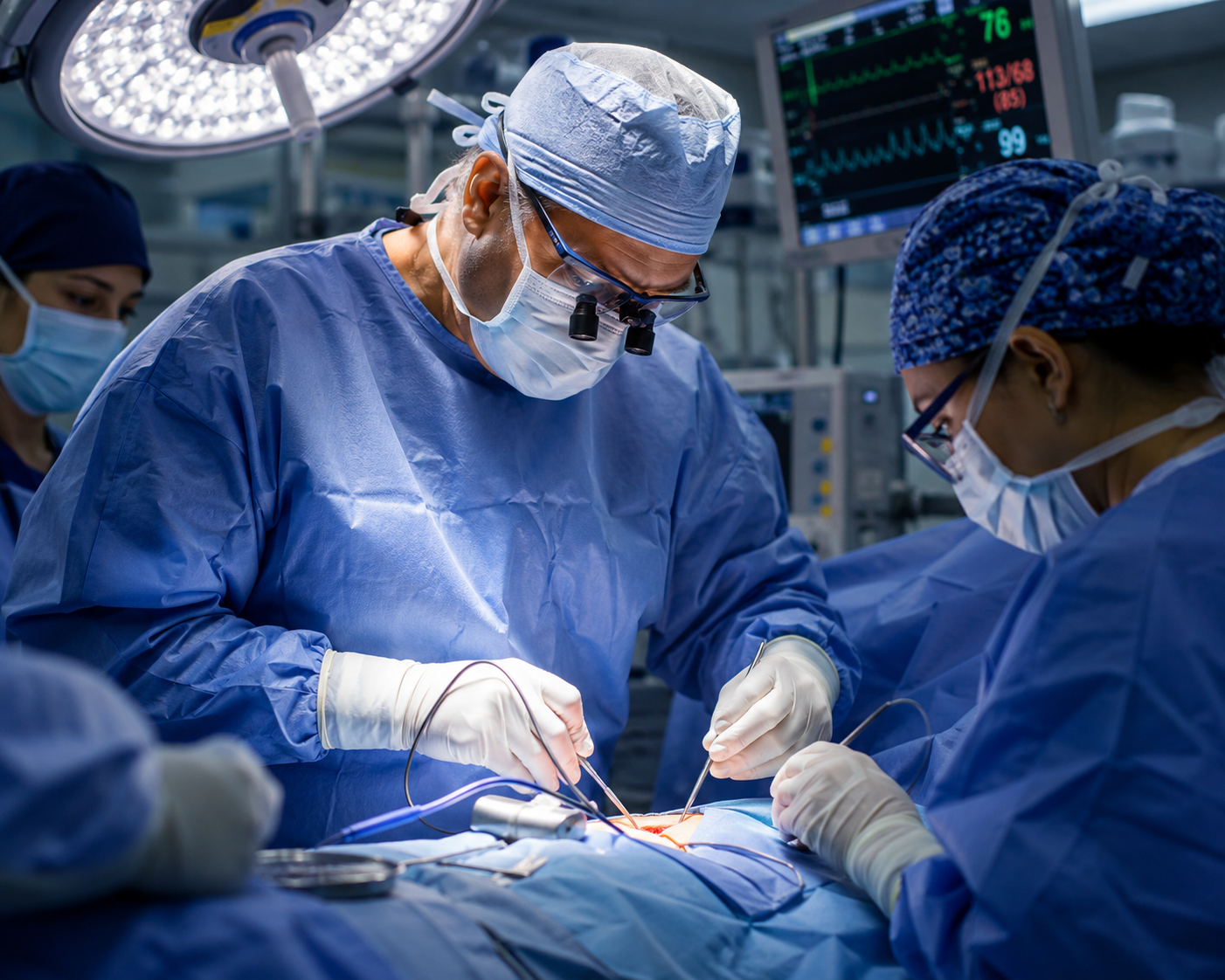
Direct MS Admission 2026: The Real Guide to Fees, Surgical Matrix, and NRI Quota
Transitioning from an MBBS graduate to a specialised surgeon is arguably the most rigorous path in Indian medical education. With over 2 lakh candidates appearing for NEET PG annually, the competition for the approximately 12,000 Master of Surgery (MS) seats is fierce. For doctors who have the financial bandwidth but miss the extremely tight All India Rank (AIR) cutoffs for government institutes, Direct MS Admission through the Management and NRI quotas remains the most strategic and legitimate gateway to the operating theatre.
However, the term “direct admission” often invites fraudulent agents. Let’s establish the legal reality immediately: There is no backdoor entry into Indian surgical residency.
Direct admission strictly refers to securing a seat via the Management Quota (in State Private Colleges) or the NRI Quota (in Deemed Universities and Private Colleges). Every single seat must be allotted through the official centralised digital counselling portals—either the Medical Counselling Committee (MCC) or the respective State Directorates of Medical Education (DME). Bypassing this process is illegal, and any seat acquired outside the counselling matrix will not be recognised by the National Medical Commission (NMC).
Here is the exhaustive, data-backed breakdown of MS branches, precise fee structures, ROI prioritisation, and the tactical blueprint for securing a surgical seat in the 2026 academic cycle.
1. The Reality of the MS Seat Matrix in India
Before committing capital, you must understand the supply mechanics of surgical seats. India currently offers roughly 60,000+ PG medical seats, but the surgical disciplines (MS) account for only about 20% of that total.
| College Category | MS Seat Distribution | Counseling Authority | Domicile Requirement |
| Government Colleges | 50% AIQ / 50% State Quota | MCC / State DME | Yes (for State Quota) |
| Private Medical Colleges | Management Quota (15% – 50%) | State DME | Depends on “Open” vs “Closed” State |
| Deemed Universities | 85% Management / 15% NRI | MCC (mcc.nic.in) | No (Open to all India) |
If you are pursuing Direct MS Admission, your targets are the Deemed Universities (open to all Indian students, regardless of state) and Open State Private Colleges (in states like Karnataka, Uttar Pradesh, and Rajasthan that allow non-domicile students to bid for their management seats).
2. Deep Dive: Exploring MS Branches, Fees, and ROI Prioritisation
Unlike MD branches, where the degree is often the terminal qualification (e.g., MD Radiology), choosing an MS branch requires you to think one step further: Will I need an MCh (Super Speciality) later?
Surgical equipment is incredibly expensive, and establishing a private operating theater requires massive capital. Therefore, the management fee you pay for your MS must be carefully weighed against the future ROI and the timeline to independent practice.
Tier 1: The High-Demand, Independent Practice Branches
These are the most expensive MS seats because they allow for immediate, highly lucrative independent private practice right after the 3-year residency without strictly requiring an MCh.
1. MS Obstetrics & Gynaecology (OBG)
-
The Appeal: The highest-grossing surgical branch in Tier-2 and Tier-3 cities. It combines medicine, surgery, and a highly predictable patient base. Setting up a boutique maternity and nursing home is the standard, highly profitable endgame.
-
Average Management Fee: ₹25 Lakhs to ₹55 Lakhs per year. (e.g., DY Patil Pune charges ~₹55 Lakhs/year; KMC Manipal ~₹30 Lakhs/year).
-
Total 3-Year Cost: ₹75 Lakhs to ₹1.65 Crores.
-
Prioritization Insight: Unmatched ROI for those willing to handle high-stress, unpredictable emergency hours (deliveries).
2. MS Orthopaedics
-
The Appeal: Heavily mechanical, highly respected, and extremely lucrative due to the rise in trauma, sports injuries, and joint replacement surgeries.
-
Average Management Fee: ₹25 Lakhs to ₹45 Lakhs per year.
-
Total 3-Year Cost: ₹75 Lakhs to ₹1.35 Crores.
-
Prioritisation Insight: Excellent choice for those who want a pure surgical career with minimal medical crossover. High corporate hospital demand.
Tier 2: The Core Foundation Branches (The MCh Stepping Stones)
-
The Appeal: The absolute foundation of the operating room. However, in modern urban India, a plain General Surgeon faces heavy competition. Most MS General Surgery graduates treat this as a mandatory stepping stone to pursue an MCh in Plastic Surgery, Neurosurgery, GI Surgery, or Onco-Surgery.
-
Average Management Fee: ₹20 Lakhs to ₹40 Lakhs per year. (e.g., Hamdard Delhi charges ~₹35 Lakhs/year; JSS Mysore ~₹32 Lakhs/year).
-
Total 3-Year Cost: ₹60 Lakhs to ₹1.2 Crores.
-
Prioritization Insight: Because you will likely spend another 3 years (and potentially more capital) pursuing an MCh, strategic candidates deliberately look for lower-fee private colleges or open states like UP (where fees are capped around ₹14-25 Lakhs) for their MS General Surgery, saving their funds for the super-speciality phase.
Tier 3: The Micro-Surgical & Lifestyle Branches
These branches offer excellent work-life balance, heavily scheduled elective surgeries, and minimal midnight emergencies.
4. MS Ophthalmology
-
The Appeal: The most “lifestyle-friendly” surgical branch. Mostly day-care procedures (cataracts, LASIK) with very few life-and-death emergencies. Fast patient turnover means high revenue.
-
Average Management Fee: ₹15 Lakhs to ₹35 Lakhs per year.
-
Prioritization Insight: Setting up a private eye clinic requires massive initial capital for lasers and diagnostic tech, but the recurring operational stress is incredibly low.
5. MS Otorhinolaryngology (ENT)
-
The Appeal: A brilliant mix of OPD consultations and intricate micro-surgeries (cochlear implants, endoscopic sinus surgery).
-
Average Management Fee: ₹15 Lakhs to ₹30 Lakhs per year.
3. Demystifying the NRI Quota for MS Seats
Under guidelines established by the Supreme Court of India, 15% of the total PG medical seats in Deemed Universities and many State Private Colleges are strictly reserved for Non-Resident Indians (NRI), Overseas Citizens of India (OCI), or Persons of Indian Origin (PIO).
If you have an exceptionally low NEET PG rank but access to international funding, the NRI quota bypasses the intense merit-based management cutoffs, practically guaranteeing a premium surgical seat.
The Financial Cost (Paid in USD)
NRI fees are historically set at 1.5x to 2x higher than standard management fees to subsidize the institution.
-
MS OBG: $80,000 to $130,000 per year. (e.g., DY Patil Pune charges ~$130,000/year).
-
MS Orthopaedics / MS General Surgery: $60,000 to $110,000 per year.
-
MS Ophthalmology / MS ENT: $40,000 to $80,000 per year.
-
Total 3-Year Package: Ranges roughly from $150,000 to $390,000 (equivalent to ₹1.2 Crores to ₹3.2 Crores).
Strict Sponsorship Rules
The NMC enforces rigid checks to prevent domestic money laundering through the NRI quota. You cannot be sponsored by a family friend or a distant relative. The sponsor must be a First-Degree Blood Relative. Acceptable sponsors include:
-
Parents (Father or Mother)
-
Real Siblings (Brother or Sister)
-
Paternal or Maternal Uncle/Aunt (Strictly blood relations)
-
First Cousins
-
Spouse
Mandatory Documentation for NRI Conversion
Before choice filling begins, you must email the MCC to convert your nationality status to NRI by submitting:
-
Notarized Sponsorship Affidavit: A legal declaration from the sponsor taking full financial responsibility for the 3-year residency.
-
Embassy Certificate: Issued by the Indian Consulate in the sponsor’s country of residence.
-
Family Tree Document: A sworn legal affidavit mapping the exact blood lineage between the candidate and the sponsor.
-
Financial Proof: The massive tuition fees must be wired directly from the sponsor’s NRE/NRO bank account.
4. Open States vs. Closed States: The Private College Strategy
If Deemed Universities (counselled by MCC) exceed your budget, you must pivot to State Private Colleges (counselled by State DMEs). Your eligibility here depends entirely on state domicile laws.
The “Open” States (High Opportunity)
These states allow non-domicile candidates (students from any part of India) to apply for the Management Quota seats in their private medical colleges.
-
Uttar Pradesh (UPDGME): Highly favoured for MS General Surgery and Orthopaedics. The UP government heavily regulates private college fees (ranging strictly between ₹14 Lakhs to ₹25 Lakhs per year). Because it is relatively affordable, it requires a reasonably good NEET PG score.
-
Karnataka (KEA): Home to excellent surgical institutes like St. John’s and MS Ramaiah. Karnataka has distinct quota tiers, with “Q Quota” (Management) fees ranging from ₹30 Lakhs to ₹45 Lakhs.
-
Rajasthan & Haryana: Open to all, but management fees are highly deregulated, often touching ₹40 Lakhs to ₹50 Lakhs per year.
The “Closed” States
States like Maharashtra, Gujarat, and Madhya Pradesh strictly reserve their private college management seats for their own domicile students or those who completed their MBBS within the state. If you do not have domicile, do not waste your time applying to their state DMEs.
5. The Step-by-Step Direct Admission Counselling Process
Do not let brokers hijack your counseling flow. The mechanism is entirely digital, transparent, and unforgiving of errors.
6. Expert Insights: The Hidden Costs of Surgical Residency
Securing an MS seat is merely the initial transaction. Before finalizing your choices, you must factor in the hidden, structural costs of private residency:
| Financial Factor | Impact on MS Candidates |
| Surgical Equipment Costs | Unlike medical branches, MS residents are often required to purchase their own specialized loupes, headlamps, and basic surgical kits, which can run into lakhs. |
| Hostel & Mess Fees | Residency is a 24/7 job. Living on campus is strictly mandatory. Institutional hostel fees range from ₹1.5 Lakhs to ₹3.5 Lakhs annually. |
| Stipend Deductions | While government MS residents earn up to ₹1.2 Lakhs/month, Deemed and Private universities often pay heavily reduced stipends (₹30,000 – ₹50,000/month) or practically zero for NRI candidates. Factor this loss of income into your ROI calculations. |
| The Bank Guarantee Trap | Many private colleges demand a Bank Guarantee for the remaining two years of fees at the time of admission. You must pledge liquid assets or property equivalent to ₹1 Crore+ to the bank to secure this guarantee. |
| Seat Leaving Penalties | Resigning an MS seat midway (to upgrade or change fields) triggers a penalty bond. In Deemed universities, this legally obligates you to pay the entire 3-year course fee before they release your original MBBS certificates. |
Navigating the NEET PG 2026 admission matrix for surgical branches requires clinical precision. A single error in evaluating a state’s open status, misformatting an NRI embassy certificate, or miscalculating the bank guarantee requirement can derail your career and cost you millions.
Ensure your entire counselling flow—from Round 1 choice filling to Mop-Up round strategy—is mathematically optimised for your exact budget and rank.