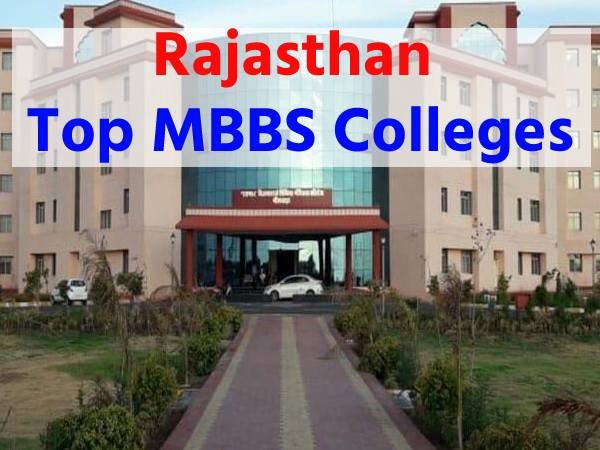
The Ultimate Guide to MBBS Admission Through Management & NRI Quota in Rajasthan (2025-2026)
If you are reading this, you probably already know that securing an MBBS seat in India is one of the most fiercely competitive academic battles in the world. With millions of students vying for a limited number of government seats, the dream of becoming a doctor can sometimes feel out of reach. However, if you have the financial backing, MBBS admission through the Management Quota and NRI Quota in Rajasthan offers a legitimate, highly sought-after pathway to securing a seat in some of the country’s best medical institutions.
Rajasthan has rapidly emerged as a premium hub for medical education. With massive expansions in infrastructure, the state now boasts over 5,500+ MBBS seats across 27+ government and 15+ private medical colleges. But navigating the fees, seat matrix, hidden costs, and the complex counseling process can be overwhelming.
This comprehensive, 3,000-word deep dive is designed to give you absolute clarity. Whether you are a parent trying to budget for the next five and a half years, or a student looking to leverage your NEET score strategically, this guide covers everything you need to know—with deep, human-verified insights.
1. Demystifying the Quotas: State, Management, and NRI
Before we dive into the numbers, it is crucial to understand the structural difference between the types of seats available in Rajasthan’s medical ecosystem. All admissions, regardless of the quota, are strictly centralized and conducted by the NEET UG Medical & Dental Admission / Counselling Board, Rajasthan (under DME, Jaipur). Direct college-level admissions are illegal.
-
State Government Quota (Subsidized): These are highly subsidized seats (ranging from ₹70,340 to ₹1.25 Lakhs per year) available only to Rajasthan domicile students who score exceptionally well in NEET.
-
Government Management Seats (Self-Financing): A unique feature in Rajasthan’s RajMES (Government Society) colleges. These seats cost around ₹9.57 Lakhs per year and offer a middle ground for students with slightly lower NEET scores who still want the prestige of a government hospital.
-
Private Management Quota: These are seats in private medical colleges open to both domicile and non-domicile (All India) students. The fees are significantly higher, dictated by the private institutions but regulated by the state fee fixation committee.
-
NRI Quota: Seats reserved for Non-Resident Indians, Overseas Citizens of India (OCI), Persons of Indian Origin (PIO), or students sponsored by an NRI blood relative. Interestingly, Rajasthan offers a massive number of NRI seats in Government Medical Colleges, making it a goldmine for eligible candidates.
2. MBBS Admission Through Management Quota in Rajasthan
The Management Quota in Rajasthan’s private medical colleges is the primary route for students who have qualified NEET but missed the cut-off for government seats. Because Rajasthan is an “Open State” for private medical college admissions, students from any state in India can apply for these seats.
A. Eligibility Criteria for Management Quota
To sit for the counseling and claim a Management Quota seat, you must meet the following strict criteria:
-
NEET UG Qualification: You must have appeared for and qualified the NEET UG exam in the current academic year. The minimum qualifying percentiles generally remain:
-
General / EWS: 50th Percentile
-
OBC / SC / ST: 40th Percentile
-
PwD (General): 45th Percentile
-
-
Academic Requirements: You must have passed Class 12 (or equivalent) with Physics, Chemistry, Biology/Biotechnology, and English. You need a minimum aggregate of 50% in PCB (40% for reserved categories).
-
Age Limit: You must be at least 17 years old on or before December 31st of the admission year. There is currently no upper age limit as per NMC guidelines.
-
Domicile Independence: For the Management Quota in private colleges, you do not need a Rajasthan domicile certificate. Students from Delhi, Maharashtra, UP, or any other state are treated equally during the allotment of these specific seats.
B. Deep Dive: Private College Fee Structure & Seat Matrix (2025-2026)
Private medical colleges in Rajasthan are known for excellent infrastructure, but they are also among the most expensive in India. You must plan your finances meticulously, as the advertised tuition fee is never the final cost.
Below is an insightful breakdown of the estimated annual Management Quota fees and seat availability for the top private medical colleges in Rajasthan.
| Name of Private Medical College | Estimated Management Quota Fee (Per Annum) | Total Intake (Approx.) | Clinical Exposure & Insight |
| Pacific Institute of Medical Sciences (PIMS), Udaipur | ₹ 35,00,000 | 150 | Premium infrastructure; highest fee bracket but excellent modern facilities. |
| Geetanjali Medical College & Hospital, Udaipur | ₹ 29,00,000 – ₹ 30,00,000 | 250 | Highly reputed; massive patient footfall; one of the top choices for private MBBS. |
| Pacific Medical College & Hospital (PMCH), Udaipur | ₹ 29,00,000 – ₹ 30,00,000 | 150 | Sister branch to PIMS, slightly lower fee but comparable academics. |
| National Institute of Medical Science (NIMS), Jaipur | ₹ 25,00,000 – ₹ 30,00,000 | 250 | Located in the capital; vibrant campus life; high preference due to location. |
| Mahatma Gandhi Medical College & Hospital, Jaipur | ₹ 26,75,000 | 250 | One of the oldest and most respected private colleges in the state. |
| JNU Institute of Medical Sciences, Jaipur | ₹ 25,50,000 – ₹ 28,00,000 | 150 | Backed by Jaipur National University; decent academics and connectivity. |
| Dr. S.S. Tantia Medical College, Sriganganagar | ₹ 28,75,000 – ₹ 29,25,000 | 150 | Good option for students from Punjab/Haryana due to border proximity. |
| American Institute of Medical Science, Udaipur | ₹ 28,00,000 – ₹ 32,00,000 | 150 | Good campus, growing reputation in the Mewar region. |
| Vyas Medical College & Hospital, Jodhpur | ₹ 28,20,000 | 150 | Dominant private medical college in the western Rajasthan region. |
| Ananta Institute of Medical Science, Rajsamand | ₹ 24,00,000 – ₹ 28,00,000 | 150 | Slightly more affordable management quota; peaceful campus environment. |
| JIET Medical College & Hospital, Jodhpur | ₹ 28,20,000 | 150 | Newer establishment, leveraging the JIET group’s educational legacy. |
(Note: Fees are subject to 5-10% periodic revisions by the state fee regulatory committee. Always verify the exact figure on the official DME portal during counseling.)
C. The “Hidden” Costs: Reading Between the Lines
A rookie mistake many parents make is multiplying the tuition fee by 4.5 years and assuming that is the final budget. It is not. Here is the deep knowledge you need regarding the actual financial commitment:
-
Duration of Fee Payment: While the academic course is 4.5 years plus a 1-year internship, many private colleges in Rajasthan structure their fee collection over a full 5 years. You must confirm this during reporting.
-
Bank Guarantees: This is a critical hurdle. Most private medical colleges in Rajasthan demand a Bank Guarantee (BG) or post-dated cheques for the remaining years’ fees at the time of admission. If you cannot produce a BG, your admission will be canceled, even if you have an allotment letter.
-
Hostel & Mess Charges: Mandatory in almost all private colleges. Expect to pay between ₹ 2,00,000 to ₹ 3,50,000 per year for AC/Non-AC accommodation.
-
Security Deposits: A one-time refundable caution money deposit ranging from ₹ 2,00,000 to ₹ 5,00,000 is collected in the first year.
-
Miscellaneous Charges: University registration, exam fees, library fees, and uniform charges can add another ₹ 50,000 to ₹ 1,00,000 annually.
Total Budget Reality Check: If a college’s Management Quota fee is ₹ 28 Lakhs/year, your total out-of-pocket expense for the 5.5-year duration will realistically touch ₹ 1.50 Crore to ₹ 1.65 Crore.
3. The Goldmine: MBBS Admission Through NRI Quota in Rajasthan
While Management Quota seats in private colleges are expensive, Rajasthan offers something unique that draws attention from across the globe: A massive NRI Quota exclusively in Government Medical Colleges.
Unlike states where NRI seats are dominated by expensive private Deemed Universities, Rajasthan has historically reserved 15% of its seats in government medical colleges (and RajMES society colleges) for NRI candidates.
A. The Big 2025-2026 Update: Fixed and Reduced NRI Fees
Historically, NRI fees in Rajasthan government colleges were pegged to the US Dollar (around $38,000+ per year) and escalated by 5% annually. This led to massive financial uncertainty due to fluctuating exchange rates, leaving many NRI seats vacant.
In a landmark decision, the Rajasthan Government recently restructured and slashed these fees.
-
The New Fee Structure: For the 2025-2026 academic sessions onwards, the NRI quota fee in government (RajMES) medical colleges is fixed at ₹ 23,92,978 to ₹ 25,12,627 per annum (depending on the specific college).
-
No Currency Fluctuation: The fee is now fixed in Indian Rupees (INR).
-
Why is this a big deal? Private college management quotas cost ₹28-35 Lakhs per year. The Govt NRI quota now costs ~₹25 Lakhs per year. Eligible students can study in a Government Hospital (which offers superior clinical exposure, diverse patient flow, and better postgraduate prospects) for less money than a private college.
B. Who is Eligible for the NRI Quota?
The eligibility criteria are strictly vetted. To claim an NRI seat, you must fall into one of these categories:
-
Category 1 (Direct NRI/OCI/PIO): The candidate themselves is an NRI, Overseas Citizen of India, or Person of Indian Origin.
-
Category 2 (NRI Parent): At least one of the parents of the candidate is an NRI ordinarily residing abroad.
-
Category 3 (First-Degree NRI Sponsor): The candidate is sponsored by a real brother or sister residing abroad as an NRI.
-
Category 4 (Second-Degree NRI Sponsor): If the above are not applicable, the student can be sponsored by a close blood relative such as a Grandparent, Uncle, Aunt, or First Cousin, provided they have legally taken the student as a ward and provide a sworn affidavit.
Deep Insight: Document Verification is Ruthless. You cannot fake NRI status. You must present valid passports, visas, resident cards, embassy certificates showing NRI status, and a strict family tree certificate (often required to be attested by the local Tehsildar/SDM) proving the exact biological relationship to the sponsor.
C. Seat Matrix for Government NRI Quota
Rajasthan currently offers around 447 dedicated NRI quota MBBS seats across 27 government medical colleges. There is no NRI reservation in Rajasthan’s private medical colleges; it is entirely a government college affair.
Here is a glimpse of top government medical colleges offering ~15 NRI seats each:
-
RUHS College of Medical Sciences, Jaipur
-
R N T Medical College, Udaipur
-
Jawaharlal Nehru Medical College, Ajmer
-
Government Medical College, Kota
-
Jhalawar Medical College, Jhalawar (Offers up to 30 NRI seats)
-
Newer RajMES Colleges: Alwar, Barmer, Bharatpur, Bhilwara, Churu, Dungarpur, Pali, Sikar, Chittorgarh, Dholpur, Sri Ganganagar, etc. (These newer colleges are excellent backup options where NRI cut-offs drop significantly).
4. The Comprehensive Rajasthan NEET UG Counseling Process
Understanding the fees and eligibility is only half the battle. The actual war is fought during the online counseling rounds. A single missed deadline or an incorrect choice preference can cost you your seat.
Here is the step-by-step blueprint of the Rajasthan NEET UG Counseling process for Management and NRI quotas.
Phase 1: Online Registration & Fee Payment
Usually commencing in July/August after the NEET results, candidates must register on the official DME Rajasthan portal.
-
Application Fee: You must pay a non-refundable registration fee (₹2,500 for General, ₹1,500 for Reserved).
-
Security Deposit (Crucial Step): To participate in the choice filling for private medical colleges (Management Quota), you must deposit a refundable security amount of ₹ 5,00,000. If you are targeting Government NRI seats, the deposit is usually around ₹ 10,000 to ₹ 50,000. If you are allotted a seat in Round 2 or 3 and fail to join, this security deposit is forfeited.
Phase 2: Document Verification (Mandatory for NRI)
While regular state/management quota candidates usually get their documents verified at the time of college reporting, NRI candidates must undergo physical or strict online document verification BEFORE choice filling. The Rajasthan State Board will release a specific date for NRI document verification at the Govt. Dental College (RUHS CDS) or SMS Medical College in Jaipur. If you miss this, your NRI status will be rejected, and you will be pushed to the general All India pool.
Phase 3: The Merit List Generation
The state does not use your raw NEET All India Rank (AIR) directly for allotment. Instead, based on the registered candidates, Rajasthan generates a State Merit List. A separate, highly specialized merit list is generated exclusively for approved NRI candidates.
Phase 4: Choice Filling and Locking
This is where strategy dictates success.
-
You must log in and arrange the medical colleges in decreasing order of your preference.
-
Expert Insight: Never fill choices blindly. If you list PIMS Udaipur as choice #1 and NIMS Jaipur as choice #2, the algorithm will lock you into PIMS if your rank permits, even if you later realize NIMS was closer to your home or budget. Lock your choices before the deadline, or they will auto-lock.
Phase 5: Seat Allotment (Rounds 1, 2, 3, and Stray Vacancy)
The counselling happens in multiple rounds:
-
Round 1 (Free Exit): You get an allotment. If you don’t like the college, you can simply not report. There is no penalty, and your ₹2 Lakh deposit is safe. You can participate freshly in Round 2.
-
Round 2 (The Serious Round): If you are allotted a seat here, you MUST join. If you choose to leave the seat, your ₹2 Lakh security deposit is forfeited, and you may face restrictions participating in further state rounds.
-
Round 3 (Mop-Up Round): Conducted mostly for vacant seats. By this time, high-demand management seats are usually gone, but occasionally, students drop out, creating sudden vacancies.
-
Stray Vacancy Round: Conducted entirely online now (as per new NMC rules). No offline college-level admissions. Any remaining NRI seats that find no takers by Round 3 are converted into Management Quota seats and offered to the general applicant pool at the management fee structure.
Phase 6: Reporting and Joining
Once you download your Provisional Allotment Letter, you must report to the nodal center (usually SMS Medical College, Jaipur) within 4 to 5 days. You must carry:
-
All Original Academic Documents (10th, 12th, TC, Migration).
-
NEET Scorecard and Admit Card.
-
Demand Draft / RTGS receipt for the entire first year’s tuition fee.
-
The required Bank Guarantee for future years.
-
Medical Fitness Certificate.
-
NRI/Sponsorship Affidavits (if applicable).
5. Strategic Insights & Common Pitfalls
With stakes this high and budgets crossing the ₹1.5 Crore mark, the margin for error is zero. Here are deep, strategic insights to navigate this landscape safely:
A. The “Low Score, Guaranteed Seat” Trap
Every year, thousands of desperate parents fall prey to scammers promising “Direct Admission” or “Confirmed Management Seats” in Rajasthan private colleges for a cash donation. Do not fall for this. The Medical Council of India (NMC) has mandated that 100% of seats, including NRI and Management, must be filled strictly through the computerized state counseling portal based on NEET merit. If an agent promises you a backdoor entry, they are lying. The only way in is through the official DME portal.
B. Leveraging the NRI Quota with a Low Score
If you have a legitimate NRI sponsor, this is your greatest weapon. Because the fees are high (~₹25 Lakhs/year) and the eligibility is strict, the competition pool for the 447 NRI seats shrinks dramatically.
Students with NEET scores as low as 150 to 250 marks frequently secure admission in newly established government medical colleges (like GMC Barmer, GMC Churu, or GMC Karauli) through the NRI quota. You secure a government tag, top-tier clinical exposure, and a respected degree without needing a 650+ score.
C. The Conversion Factor (Stray Round Gold)
If you do not have an NRI sponsor but have a decent budget, keep a very close eye on Round 3 and the Stray Vacancy Round. Historically, if NRI seats remain unfilled in government colleges, they are converted into standard Management seats. Being alert during these final hours of counselling can sometimes land you a seat in a highly reputed institution that you thought was entirely out of reach during Round 1.
D. The Bond Penalty
It is vital to read the fine print. Students taking admission in Government Medical Colleges in Rajasthan (even under the NRI quota) are subject to state service bonds. Generally, graduates from government institutions must serve the state government in rural/semi-urban healthcare centers for 2 years, or pay a heavy penalty (usually ₹5 Lakhs). Private medical colleges generally do not enforce rural service bonds, which is a factor to weigh when deciding between a Govt NRI seat and a Private Management seat.
6. Conclusion: Navigating the Rajasthan Medical Frontier
Securing an MBBS admission through the Management or NRI quota in Rajasthan is not a process you can wake up and do on a whim. It is a calculated, high-stakes endeavour that requires months of financial planning, meticulous document preparation, and a flawless execution of the counselling strategy.
The recent stabilisation of NRI fees in government colleges to ~₹25 Lakhs per annum in Indian Rupees is a monumental shift, making Rajasthan one of the most attractive, transparent, and high-value destinations for NRI and sponsored students globally. Simultaneously, the private medical sector, though expensive, offers world-class infrastructure for those utilizing the Management Quota.
Your Action Plan:
-
Assess Your Finances Early: Ensure your liquid funds are ready and initiate conversations with your bank regarding the Bank Guarantees well before July.
-
Organize Documents Now: If you are claiming the NRI quota, do not wait for the NEET results to arrange embassy letters and sponsorship affidavits. The bureaucracy takes time.
-
Stay Glued to the DME Portal: The official website for Rajasthan NEET counseling changes its domain suffix slightly every year. Ensure you are checking the authentic state medical education portal daily once counseling season begins.
The journey to adding “Dr.” to your name is arduous, but by mastering the intricacies of Rajasthan’s seat matrix, fee structures, and quota regulations, you can turn a complex bureaucratic maze into a clear, strategic path to success.