

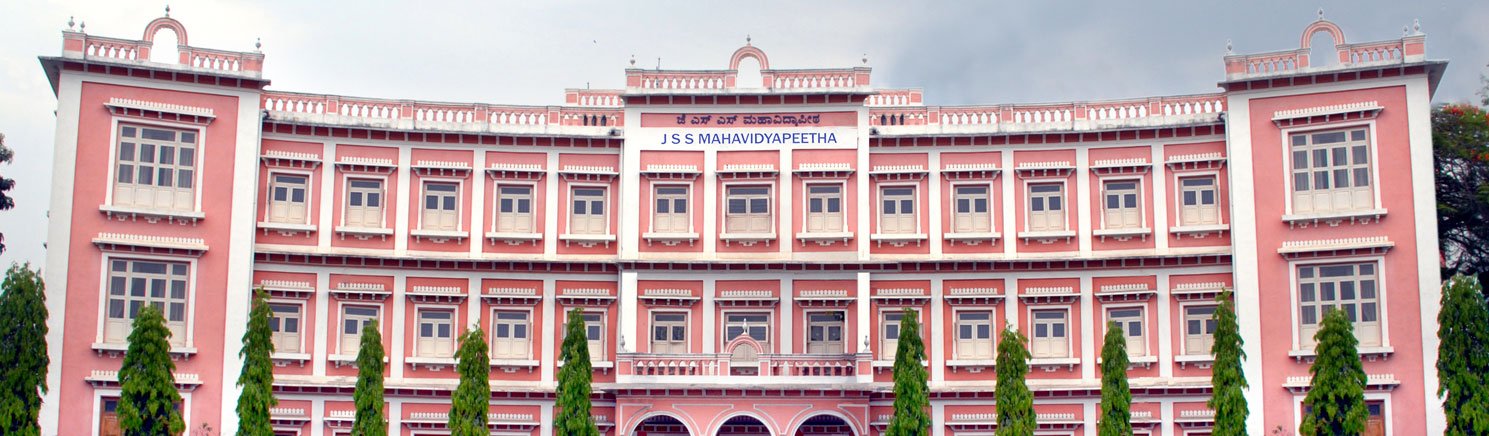
Direct MBBS Admission in JSS Mysore
Why Choose JSS Medical College, Mysore for Your MBBS?
Before diving into the admission mechanics, it is crucial to understand why JSS Medical College (JSSMC) commands such high respect among medical fraternities and aspirants alike. Established in 1984, JSS Medical College operates under the aegis of the JSS Academy of Higher Education & Research (JSS AHER), a Deemed-to-be University.
1. World-Class Clinical Exposure
For an MBBS student, theoretical knowledge is only as good as the clinical practice that follows. JSS Hospital is one of the largest single-campus hospitals in India, boasting a massive 1,800+ bed capacity. This guarantees an extraordinary daily out-patient department (OPD) footfall and a diverse range of clinical cases. Students are exposed to rare pathologies, advanced surgical procedures, and rural healthcare challenges, making them highly competent clinicians by the time they graduate.
2. Global Accreditations and Rankings
JSS AHER is accredited with an A+ Grade by NAAC and consistently ranks among the top medical colleges in the NIRF (National Institutional Ranking Framework) rankings. Furthermore, its MBBS degree is recognized by the National Medical Commission (NMC), the World Health Organization (WHO), and the General Medical Council (UK), opening global pathways for students wishing to pursue USMLE or PLAB in the future.
3. State-of-the-Art Infrastructure
Spread across a lush, sprawling 43-acre campus in the cultural capital of Karnataka, the college features advanced anatomy dissection halls, simulation labs, a mammoth digital library, and modern research facilities. The environment is highly conducive to rigorous medical training.
JSS Medical College MBBS Seat Matrix (In-Depth Analysis)
Understanding the seat matrix is the first step in strategizing your admission. JSS Medical College has an annual intake capacity of 250 MBBS seats, approved by the National Medical Commission (NMC). Because it is a Deemed University, the majority of its seats are filled through the Medical Counselling Committee (MCC) at the national level, with no state domicile restrictions for the management quota.
Here is the precise breakdown of the 250 MBBS seats:
| Quota Category | Percentage Share | Number of Seats | Counseling Authority |
| All India Management Quota | ~80% – 85% | 199 to 212 Seats | MCC (DGHS), New Delhi |
| NRI / Foreign Quota | 15% | 38 Seats | MCC (DGHS), New Delhi |
| Karnataka State Govt. Quota | As per MoU | 12 to 13 Seats | KEA (Karnataka Examination Authority) |
Decoding the Quotas:
-
Management Quota (All India Merit): These are “Paid Seats.” Any student from any state in India who has qualified NEET-UG can apply for these seats. There is no domicile reservation, meaning a student from Delhi or Haryana has the exact same chance as a student from Karnataka. Admission is strictly based on your All India Rank (AIR) in NEET.
-
NRI Quota: 15% of the total intake (38 seats) is strictly reserved for Non-Resident Indians, Overseas Citizens of India (OCI), or students sponsored by blood relatives who are NRIs.
-
State Quota: A very small fraction of seats is surrendered to the Karnataka state government based on a mutual understanding. These seats are highly competitive, have a lower fee structure, and are available strictly to Karnataka domicile students through KEA counseling.
Deep Knowledge: JSS Medical College MBBS Fees Structure
Finances play a pivotal role in opting for a Deemed Medical University. The fee structure at JSS Medical College is transparent but substantial, reflecting the premium quality of education and infrastructure provided.
1. Management Quota Fees (All India Category)
For students securing a seat under the Management/Paid Quota, the fee is standard across the board.
-
Annual Tuition Fee: ₹ 21,95,100/-
-
Other Fees (1st Year Only): ₹ 1,45,100/- (Includes university registration, eligibility, library, and laboratory fees).
-
Total First Year Fee: ₹ 23,40,200/-
-
Duration of Payment: Fees must be paid for 4.5 years. The final 1 year is the mandatory rotating internship, during which you are not required to pay tuition fees, and you will receive a monthly stipend.
-
Estimated Total Tuition Cost: Approximately ₹ 98.7 Lakhs to ₹ 1 Crore over the entire course.
2. NRI Quota Fees
For candidates applying under the NRI category, the tuition fee is mandated to be paid in US Dollars (USD) or its equivalent in Indian Rupees from an NRE/NRO account.
-
Annual Tuition Fee: USD $46,000
-
Other Fees (1st Year): ₹ 1,45,100/-
-
Estimated Total First Year Fee: Approximately ₹ 40,00,000/- (depending on the exact foreign exchange rate at the time of admission).
-
Duration of Payment: 4.5 years.
3. Hostel and Mess Charges
Living on campus is highly recommended for medical students due to odd clinical hours and rigorous study schedules. The hostels at JSS are well-maintained with robust security.
-
Boys Hostel (Annual): ₹ 1,87,000/- (Includes accommodation and standard mess charges).
-
Girls Hostel (Annual): ₹ 1,87,800/-
-
Note: Hostel fees are payable at the time of physical reporting and are subject to nominal yearly increments.
4. Fee Refund and Forfeiture Policy
It is crucial to be aware of MCC’s strict rules. If a candidate is allotted a seat in Round 2 or Round 3 and wishes to withdraw outside the permissible MCC schedule, the college is legally entitled to forfeit the entire course fee as a penalty for seat blocking. Always lock choices with absolute certainty.
The Reality of “Direct Admission” and Management Quota Seats
There is a widespread misconception regarding “Direct Admission” in medical colleges. Let us set the record straight: There is no backdoor entry into any recognized medical college in India. The term “Direct Admission” in the context of JSS Medical College refers to securing a seat through the Management Quota.
-
NEET is Mandatory: You cannot buy a seat without qualifying for the NEET-UG examination. You must score at or above the 50th percentile (for General category) or the 40th percentile (for reserved categories).
-
No Capitation Fee: Admissions are governed by a strictly centralized, merit-based counseling process conducted by the Medical Counselling Committee (MCC). You do not pay “donations” in cash to middlemen or the college.
-
Merit-Based Allocation: Even for Management Quota seats, your NEET All India Rank determines if you get the seat. If the cutoff rank for JSS Management Quota stops at 1,50,000, and your rank is 2,00,000, you will not secure the seat, regardless of your willingness to pay the fee.
-
The Role of Expert Guidance: Securing these seats requires a strategic approach to choice filling. Knowing when to float, slide, or lock a seat across Round 1, Round 2, Mop-Up, and Stray Vacancy rounds is where expert educational consultancy makes a definitive difference.
NRI Quota Seats: Rules, Eligibility, and Benefits
The 38 NRI seats at JSS Medical College offer a strategic advantage. Because the fee structure is significantly higher, the competition (and consequently, the NEET cutoff rank) is much lower compared to the Management Quota.
Who is Eligible for the NRI Quota?
The Supreme Court of India and MCC have laid down strict guidelines defining NRI eligibility. You can apply if you fall into one of these categories:
-
You are an NRI, OCI (Overseas Citizen of India), or PIO (Person of Indian Origin).
-
NRI Sponsorship: If the student is an Indian citizen, they can be sponsored by a First-Degree Blood Relative who resides abroad as an NRI.
-
Who counts as a sponsor? Parents, real brothers/sisters, real uncle/aunts (paternal or maternal), or grandparents.
Crucial Documents for NRI Claim
To successfully claim an NRI seat during MCC counseling, you must prepare a comprehensive dossier of documents, which usually needs to be emailed to MCC for nationality conversion prior to choice filling:
-
Sponsorship Affidavit: A notarized affidavit from the sponsor stating they will bear the entire cost of the 5.5-year medical education.
-
Embassy Certificate: A certificate from the Indian Embassy in the sponsor’s country of residence validating their NRI status.
-
Passport & Visa: Copies of the sponsor’s valid passport and resident visa.
-
Relationship Proof: Legal documents (like family tree certificates, birth certificates, or passport copies) proving the exact relationship between the sponsor and the student.
-
NEET Scorecard: Showing qualified status.
The Complete Step-by-Step Admission Process
Admission to JSS Medical College is centralized. You must not apply to the college directly via their website for MBBS. Instead, you must route your application entirely through the Medical Counselling Committee (mcc.nic.in).
Step 1: Qualify NEET-UG
Appear for the National Eligibility cum Entrance Test and score above the qualifying percentile.
Step 2: MCC Registration
Once MCC opens the counseling portal, register as a candidate. During registration, you must explicitly select the “Deemed Universities” counseling option.
Step 3: Security Deposit
To participate in Deemed University counseling, you must pay a non-refundable registration fee of ₹ 5,000 and a refundable security deposit of ₹ 2,00,000. If you do not pay this ₹ 2 Lakh deposit, you will not be allowed to fill choices for JSS Medical College.
Step 4: Choice Filling and Locking
During the choice filling window, search for “JSS Medical College, Mysore” and add it to your preference list. If you are specifically targeting JSS, keep it at the top of your choices. Once satisfied, lock your choices before the deadline.
Step 5: Seat Allotment Results
MCC will run its algorithm based on NEET merit and your preferences. If allotted a seat, download the Allotment Letter.
Step 6: Physical Reporting
You must travel to JSS Medical College, Mysore, with your original documents, the allotment letter, and the first year’s fee (usually payable via Demand Draft or RTGS). The college nodal officers will verify your documents, process the fee, and confirm your admission on the NMC portal.
Eligibility Criteria for MBBS at JSS Medical College
Before initiating the admission process, ensure you strictly meet the statutory eligibility criteria set by the National Medical Commission:
-
Age Limit: The candidate must be at least 17 years old on or before the 31st of December of the year of admission. There is currently no upper age limit for NEET-UG.
-
Academic Qualifications: The student must have passed the 10+2 examination (or equivalent) with Physics, Chemistry, Biology/Biotechnology, and English as core subjects.
-
Minimum Marks in 12th Grade: * General Category / NRI / Management: Minimum 50% aggregate in Physics, Chemistry, and Biology.
-
OBC/SC/ST Category: Minimum 40% aggregate in PCB.
-
PwD Category: Minimum 45% aggregate in PCB.
-
-
NEET-UG: Mandatory qualification. Even a single mark below the cutoff percentile renders a student entirely ineligible for admission, regardless of quota or financial capacity.
JSS Medical College NEET Cutoff Analysis (Management Quota)
To plan for Direct Admission under the Management Quota, you must have a realistic expectation of the required NEET scores. Because JSS is highly sought after, its Management Quota cutoff is higher than many other newly established deemed universities.
Below is an analytical look at the recent closing ranks for the All India Management Quota:
| Counseling Round | Expected Closing Rank (AIR) | Approximate NEET Score |
| Round 1 | 1,15,000 to 1,22,000 | 540 – 565 Marks |
| Round 2 | 1,60,000 to 1,65,000 | 480 – 500 Marks |
| Round 3 / Mop-Up | 1,67,000 to 1,75,000 | 450 – 480 Marks |
| Stray Vacancy | Highly variable | Dependent on seat surrender |
Expert Insight: The cutoff scores drop slightly in Round 2 and Round 3 as top-ranking students vacate their deemed seats for government medical colleges in state counseling. However, relying on the Stray Vacancy round is incredibly risky, as seats are rarely left vacant at an institution of JSS’s caliber. Targeting a safe score of 520+ ensures a comfortable admission trajectory into JSS Medical College’s management quota.
Curriculum Overview: The 5.5-Year MBBS Journey
Once admitted, students undergo a grueling but incredibly rewarding academic journey strictly governed by the Competency-Based Medical Education (CBME) curriculum mandated by the NMC.
-
Phase 1 (Pre-Clinical – 13 Months): Focuses on building the foundation with Human Anatomy, Physiology, and Biochemistry. Extensive dissection hall hours and practical labs dominate this phase.
-
Phase 2 (Para-Clinical – 13 Months): Introduces Pathology, Pharmacology, and Microbiology. Students begin their clinical postings in the hospital wards, learning to interact with patients and take clinical histories.
-
Phase 3 (Clinical Part I – 13 Months): Deep dive into Preventive & Social Medicine (PSM), Forensic Medicine (FMT), Ophthalmology, and Otorhinolaryngology (ENT). Ward postings become more intense.
-
Phase 4 (Clinical Part II – 13 Months): The final academic phase covering General Medicine, General Surgery, Obstetrics & Gynecology (OBG), and Pediatrics.
-
Compulsory Rotating Medical Internship (CRMI – 12 Months): After passing the final exams (and the upcoming NExT exam), students must complete a 365-day hands-on internship across various departments in JSS Hospital. This phase transforms a medical student into a practicing doctor.
Campus Life, Infrastructure, and Facilities
The journey of an MBBS student is demanding, making a supportive campus environment vital. JSS Medical College excels in providing a holistic ecosystem.
-
The Library: The college houses a state-of-the-art central library spread over thousands of square feet, featuring an extensive collection of international medical journals, physical textbooks, e-resources, and quiet reading rooms that stay open late into the night.
-
Hostels & Mess: Separate, highly secure hostels for boys and girls. The rooms are well-ventilated, with options for attached bathrooms. The mess serves highly nutritious, hygienic food catering to both North Indian and South Indian palates.
-
Recreation & Sports: Recognizing the need for stress relief, the campus features cricket grounds, basketball and volleyball courts, a fully equipped gymnasium, and indoor gaming facilities.
-
Skill Labs: Advanced simulation centers allow students to practice suturing, intubation, and CPR on high-fidelity mannequins before they ever touch a live patient.
-
Mysore City: Mysore is renowned for being one of the cleanest, safest, and most peaceful cities in India. The relatively low cost of living, pleasant weather, and rich cultural heritage make it an ideal place for a 5-year academic commitment.
Frequently Asked Questions (FAQs)
1. Can I get direct admission in JSS Medical College without NEET?
Absolutely not. The Supreme Court of India has mandated that NEET is the sole qualifying criteria for MBBS admission across all government, private, and deemed medical colleges. Without a qualified NEET scorecard, admission is legally impossible.
2. What is the total fee for the Management Quota at JSS Medical College?
The annual tuition fee is ₹ 21,95,100. Over the 4.5 academic years, the total tuition fee amounts to approximately ₹ 98.7 Lakhs. When you add hostel, mess, and one-time university fees, the total budget required is just over ₹ 1 Crore.
3. Does JSS Medical College have a service bond?
For All India Management and NRI quota students admitted through MCC, there is typically no rural service bond requirement after completing the MBBS course. You are free to pursue your PG or practice anywhere. However, state quota students may be subjected to KEA’s specific bond rules.
4. Can I convert my Management Quota seat to an NRI seat during counseling?
Yes. If you have the required NRI sponsorship documents, you can apply to MCC during the designated window (usually just before Round 1 starts) to change your nationality status from Indian to NRI. This allows you to bid for the NRI quota seats which have a lower NEET cutoff rank.
5. Is the internship stipend provided to MBBS students at JSS?
Yes, upon successful completion of the 4.5-year academic course, students entering their compulsory 1-year internship at JSS Hospital receive a monthly stipend as per university norms.
6. Are there any hidden charges apart from the tuition fee?
The tuition fee is fixed, but students should budget for annual university examination fees, books, medical equipment (stethoscope, dissection kits, aprons), and personal expenses. The initial ₹ 1,45,100 covers most first-year administrative and lab fees.
7. How competitive is the PG (MD/MS) admission at JSS Medical College?
Highly competitive. JSS is renowned for its clinical PG programs like MD Radio-Diagnosis, MD General Medicine, and MS General Surgery. Doing your UG here provides excellent foundational knowledge to crack the NEET-PG (or NExT), and the college offers a robust stipend ranging from ₹40,000 to ₹50,000 for PG residents.
8. Is hostel accommodation mandatory for MBBS students?
While not strictly mandatory for local residents of Mysore, it is highly recommended for all outstation students. Medical training involves early morning ward rounds and late-night study sessions, making campus accommodation the most practical and safe choice.
9. What happens if I fail an MBBS professional exam?
Medical curriculum is tough. If a student fails a professional university exam, they must appear for supplementary exams held a few months later. Repeated failures can lead to an extension of the course duration, which may attract additional tuition fees for the extended period.
10. How can educational consultants help with the JSS admission process?
The MCC counseling process is intricate. Missing a deadline, incorrect choice filling, or misunderstanding the security deposit forfeiture rules can cost a student their dream seat. Expert guidance helps analyze your specific rank against historical data, ensures flawless documentation (especially for NRI candidates), and strategizes your choice filling across multiple rounds to maximize your chances of securing a seat at JSS.
Conclusion
Securing Direct MBBS Admission in JSS Medical College, Mysore is an investment in a premier medical career. The institution’s legacy of clinical excellence, massive hospital infrastructure, and global recognition justify the financial commitment required for its Management and NRI quota seats.
The key to a successful admission lies not in seeking illegal backdoors, but in legally and smartly navigating the centralized MCC counseling process. By understanding the fee structures deeply, analyzing past cutoffs, and keeping your documentation pristine, you can turn the stressful admission season into a smooth transition toward becoming a doctor.
Stay updated with the official MCC notifications, maintain realistic expectations based on your NEET score, and execute your choice-filling strategy with precision. The journey of a thousand miles in medicine begins with the right college, and JSS Medical College is undoubtedly a brilliant place to start.