Direct MD Admission 2026: The Authoritative Guide to Fees, Branch ROI, and NRI Quota
The Legal Reality of “Direct MD Admission”
With over 2 lakh MBBS graduates competing for approximately 60,000 postgraduate seats every year, securing an MD/MS seat through pure merit in government colleges requires an astronomical percentile. For doctors with the financial bandwidth but not the top-tier All India Rank (AIR), Direct MD Admission is the most viable path to a premium clinical specialisation.
However, a critical myth must be shattered immediately: There is no “backdoor” entry in Indian medical admissions.
Direct admission strictly refers to securing a seat via the Management Quota or NRI Quota in Deemed Universities and Private Medical Colleges. These seats are legally sanctioned by the National Medical Commission (NMC) but must be allotted through the official centralised counselling portals (Medical Counselling Committee for Deemed Universities, and State DMEs for Private Colleges). Any agent promising direct admission without NEET PG qualification or bypassing the counselling process is offering a fraudulent, illegal shortcut.
To participate in the counseling for these seats, you must meet the mandatory eligibility criteria.
Eligibility Criteria for Management and NRI Seats
-
NEET PG Qualification: You must clear the minimum qualifying cutoff percentile set by NBEMS (General: 50th, SC/ST/OBC: 40th, PwD: 45th). A lower rank does not disqualify you from premium management seats, but failing the exam does.
-
Internship Completion: You must successfully complete your one-year Compulsory Rotatory Residential Internship (CRRI) on or before the NBEMS cutoff date (expected September 30 for the 2026 session).
-
Medical Registration: Permanent or provisional registration with the NMC or your respective State Medical Council is mandatory.
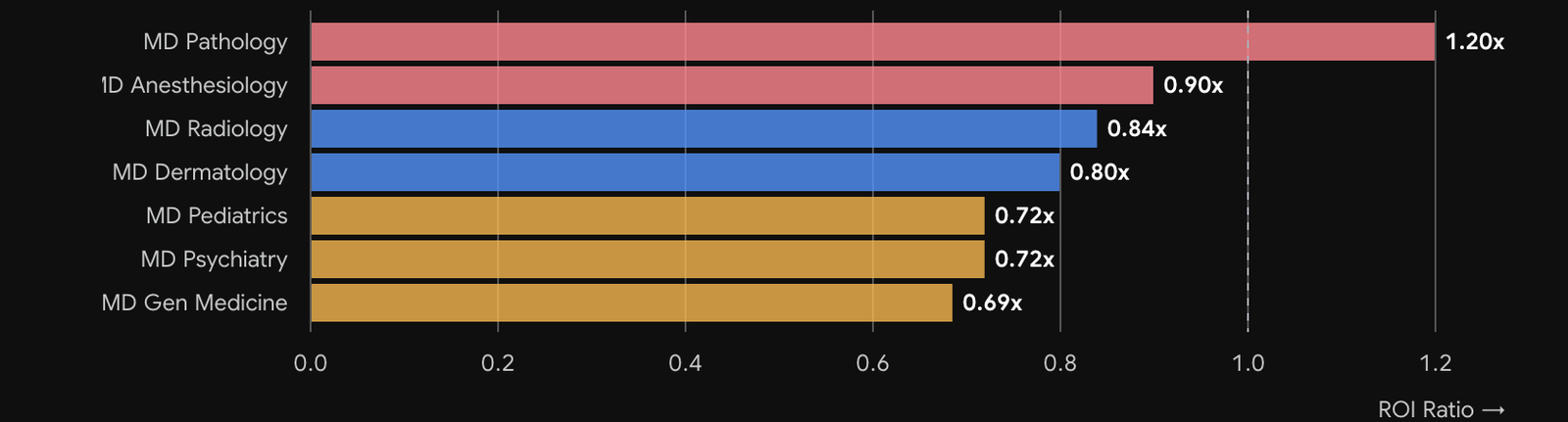
Deep Dive: Exploring MD Branches, Fees, and ROI Prioritization
Postgraduate medical admission is highly complex because the fee structure is entirely governed by the clinical demand, lifestyle, and private practice ROI of the specific branch.
Here is an exhaustive breakdown of the major MD (Doctor of Medicine) branches in India, categorized by demand, with realistic management fee brackets and expected returns.
Tier 1: The Premium Clinical & Lifestyle Branches
These are the most expensive seats in the country due to zero emergency night duties, high corporate demand, and massive cash-flow potential in private practice.
1. MD Radio-Diagnosis (Radiology)
-
The Appeal: The undisputed king of modern medicine. It offers a pristine lifestyle, zero physical strain, and is heavily reliant on advanced tech (MRI, CT, PET scans).
-
Average Management Fee: ₹35 Lakhs to ₹68 Lakhs per year.
-
Starting Salary (Post-PG): ₹2.5 Lakhs to ₹4.5 Lakhs per month.
-
Prioritization Insight: Choose this if you have high capital and want a corporate consultant lifestyle or plan to open a diagnostic chain. The initial investment is massive, but the ROI is incredibly fast.
2. MD Dermatology, Venereology & Leprosy (DVL)
-
The Appeal: Strictly OPD-based, highly predictable hours, and perfectly positioned for the booming aesthetic, cosmetology, and laser medicine industry.
-
Average Management Fee: ₹30 Lakhs to ₹60 Lakhs per year.
-
Starting Salary (Post-PG): ₹2 Lakhs to ₹4 Lakhs per month (highly scalable in a private setup).
-
Prioritisation Insight: Ideal for candidates looking for a stress-free clinical environment and high entrepreneurial upside.
3. MD General Medicine
-
The Appeal: The intellectual core of clinical medicine and the necessary gateway to highly lucrative super-specialities (DM in Cardiology, Neurology, Gastroenterology).
-
Average Management Fee: ₹28 Lakhs to ₹45 Lakhs per year.
-
Starting Salary (Post-PG): ₹1.5 Lakhs to ₹3 Lakhs per month.
-
Prioritisation Insight: Choose this if you thrive on high patient volume and complex diagnostics. It requires extreme dedication and long hours but garners maximum clinical respect.
Tier 2: The Core Clinical & Critical Care Branches
These branches involve heavy clinical workloads, emergencies, and high adrenaline. Because of the gruelling hours, the management fees are slightly lower than Tier 1.
4. MD Paediatrics
-
The Appeal: High volume, evergreen demand, and excellent NICU/PICU scope.
-
Average Management Fee: ₹25 Lakhs to ₹38 Lakhs per year.
-
Prioritisation Insight: A brilliant alternative to General Medicine for those who enjoy working with children. Highly saturated in metros but highly lucrative in Tier 2 cities.
5. MD Psychiatry
-
The Appeal: Rising mental health awareness has dramatically increased the demand for psychiatrists. Minimal emergencies and excellent private practice scope.
-
Average Management Fee: ₹18 Lakhs to ₹30 Lakhs per year.
6. MD Respiratory Medicine (TB & Chest)
-
The Appeal: Post-COVID-19, the value of pulmonologists skyrocketed. Heavy crossover with ICU management and critical care.
-
Average Management Fee: ₹20 Lakhs to ₹32 Lakhs per year.
Tier 3: Support & Para-Clinical Branches
7. MD Anesthesiology
-
The Appeal: The backbone of every surgical procedure. Excellent freelancing opportunities (visiting multiple nursing homes).
-
Average Management Fee: ₹15 Lakhs to ₹25 Lakhs per year.
8. MD Pathology
-
The Appeal: The highest-ranked para-clinical branch. Essential for running NABL-accredited diagnostic labs.
-
Average Management Fee: ₹5 Lakhs to ₹15 Lakhs per year. (Many colleges offer massive discounts or zero fees to fill these seats.
MD Branch ROI Explorer