

The Real Guide to Direct MDS Admission in Endodontics: Fees, NRI Quotas, and Top Indian Colleges
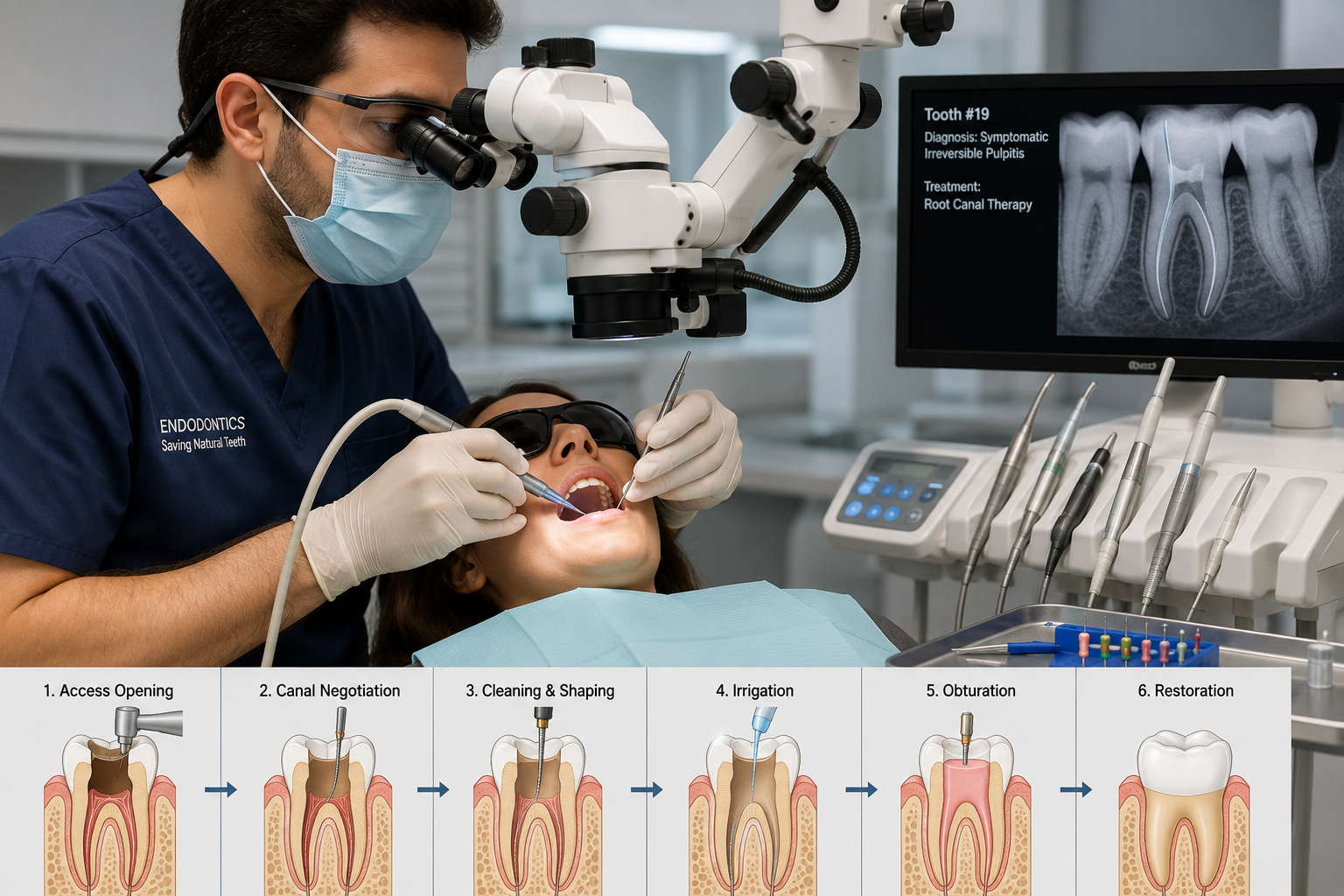
Ask any established dental practitioner which postgraduate branch drives the highest volume of daily clinical revenue, and the answer is invariably Conservative Dentistry and Endodontics. General dentistry has evolved; patients now demand painless, single-visit root canals and highly aesthetic restorative work. To deliver this, a dentist must transition from tactile, blind root canal treatments to precision-driven, microscope-assisted endodontics.
Because of its massive and immediate Return on Investment (ROI) in private practice, Endodontics commands some of the highest cutoff scores during the NEET MDS counseling process. For driven graduates who miss the razor-thin government seat cutoffs but possess the financial backing to invest in their surgical skills, securing a Direct MDS Admission in Endodontics through legal institutional quotas is the most strategic career move.
This guide breaks down the exact legal pathways, the difference between Management and NRI seats, and the hard data on 2026 fee structures for India’s top private and deemed dental universities.
The Reality of “Direct Admission”
Before looking at colleges and fees, we must establish a critical legal baseline. In India, you cannot bypass the national entrance exam. The Supreme Court and the Dental Council of India (DCI) mandate that qualifying the NEET MDS examination is an absolute prerequisite for any postgraduate dental seat.
“Direct admission” refers specifically to securing a seat through Management Quota or NRI Quota in private and deemed universities. If you secure the minimum required NEET percentile for your category, you are legally eligible to bid for these seats through the centralized counseling portals.
For Deemed Universities, 100% of the counseling (including Management and NRI seats) is conducted centrally by the Medical Counseling Committee (MCC). For private colleges affiliated with state universities, the respective state’s Directorate of Medical Education (DME) manages the allotment. The system is digital, merit-based within the respective quota pools, and strictly monitored.
Decoding the Quota System: Management vs. NRI Seats
Your strategy for securing a seat depends entirely on which quota you qualify for and can afford. They differ drastically in eligibility, documentation, and cost.
The Management Quota (Paid Seats)
Management seats exist to help institutions fund high-end infrastructure—like Zeiss microscopes, advanced CBCT machines, and premium phantom head labs.
-
Eligibility: Any NEET MDS qualified Indian citizen can apply, regardless of their state of domicile.
-
Seat Availability: In deemed universities, a vast majority of the seats (up to 85%) fall under this category.
-
Fee Structure: Paid in Indian Rupees (INR). Because Endodontics is a top-tier clinical branch, management quota fees are premium. Depending on the university’s clinical inflow and reputation, expect to pay between INR 12 Lakhs to INR 20 Lakhs per annum.
-
Competition Level: High. Even within the management quota, endodontics seats fill up rapidly in the first two rounds of counseling.
The Non-Resident Indian (NRI) Quota
The Supreme Court allows institutions to reserve up to 15% of their total MDS intake for NRIs, Persons of Indian Origin (PIO), Overseas Citizens of India (OCI), or candidates legally sponsored by an NRI relative.
-
Eligibility & Sponsorship: You do not have to be an NRI yourself. If your parent, sibling, or a first-degree blood relative (like an uncle or aunt) resides abroad, they can sponsor your education. The sponsor must submit a sworn affidavit taking full financial responsibility for the 3-year course.
-
Fee Structure: Quoted and paid in US Dollars (USD). This is the most expensive pathway, with fees for Endodontics typically ranging from USD 25,000 to USD 35,000 per year.
-
The Strategic Advantage: Because the massive fee acts as a heavy barrier to entry, the competition for NRI seats is significantly lower. A candidate with a lower NEET score who cannot secure a Management seat can comfortably secure an NRI seat in a top-tier college, provided their documentation is flawless.
At a Glance: Quota Comparison
| Parameter | Management Quota | NRI / Sponsored Quota |
| Target Demographic | All NEET MDS qualified citizens | NRIs, OCIs, PIOs, or NRI-sponsored candidates |
| Seat Allocation | ~85% of Deemed University seats | Up to 15% of total intake |
| Fee Currency | Indian Rupees (INR) | US Dollars (USD) |
| Average Annual Fee | INR 12 Lakhs to 20 Lakhs | USD 25,000 to 35,000 |
| Counseling Cutoffs | Moderate to High | Low (High conversion probability) |
Analytics and Fee Structures: Top 5 Dental Colleges for Endodontics
When pursuing Conservative Dentistry and Endodontics, your primary focus must be on clinical exposure and equipment. You need a college that mandates hundreds of root canals, provides dedicated endodontic microscopes (like Zeiss or Leica) for PGs, and trains you extensively in rotary systems, warm vertical compaction, and aesthetic veneers.
Here is the 2025–2026 data-backed breakdown of the top 5 institutions for Direct MDS Admission in Endodontics.
1. Manipal College of Dental Sciences (MCODS), Manipal
Consistently ranked at the absolute top for private dental education in India, MCODS offers an elite, research-driven program. The department is heavily equipped with operating microscopes, and residents handle a massive volume of complex retreatments, surgical endodontics (apicoectomies), and full-mouth rehabilitations.
-
Management Quota Fees: INR 57.96 Lakhs for the complete 3-year course (Approx. INR 19.32 Lakhs per year).
-
NRI Quota Fees: Approximately USD 35,000 per year.
-
Clinical Edge: World-class mentoring, massive alumni network, and extremely rigorous phantom-head to clinical transition protocols.
2. Saveetha Dental College, Chennai
Saveetha operates on a radically different, highly aggressive clinical model. Their Conservative Dentistry and Endodontics department holds records for clinical volume. They boast the largest Zeiss microscope center globally, ensuring every PG works under magnification from day one.
-
Management Quota Fees: INR 17,50,000 per year (Total: INR 52.50 Lakhs).
-
Stipend: INR 25,000 per month (effectively reducing your total cost by INR 9 Lakhs over three years).
-
NRI Quota Fees: Approximately USD 30,000 per year.
-
Clinical Edge: Residents must complete upwards of 1000 RCTs and 250 crowns before graduating. The sheer volume creates unmatched speed and efficiency.
3. Dr. D. Y. Patil Dental College and Hospital, Pune
Located in Pimpri, D.Y. Patil is a powerhouse of infrastructure. The Endodontics department features advanced CBCT integration for complex canal anatomies, laser-assisted endodontics, and extensive training in aesthetic composite restorations and indirect ceramics.
-
Management Quota Fees: INR 51.75 Lakhs for the complete 3-year course (Approx. INR 17.25 Lakhs per year).
-
NRI Quota Fees: USD 35,000 per year.
-
Clinical Edge: High urban patient footfall means exposure to patients demanding high-end aesthetic corrections, giving PGs excellent practice in smile designing.
4. JSS Dental College and Hospital, Mysore
Affiliated with the JSS Academy of Higher Education & Research, this institution offers a fantastic balance of academic rigor and clinical inflow. The cost is notably more competitive than its peers in Chennai or Pune, making it a highly sought-after option during counseling.
-
Management Quota Fees: INR 36.07 Lakhs for the complete 3-year course (Approx. INR 12 Lakhs per year).
-
NRI Quota Fees: Range from USD 20,000 to 25,000 per year.
-
Clinical Edge: Excellent hands-on training in basic and advanced rotary endodontics with a very strong focus on academic publications and thesis defence.
5. SRM Dental College (Ramapuram Campus), Chennai
SRM provides a robust clinical environment supported by a massive university infrastructure. The Endodontics department is heavily focused on modern concepts like biomimetic dentistry, vital pulp therapy, and regenerative endodontics.
-
Management Quota Fees: INR 36 Lakhs for the complete 3-year course (INR 12 Lakhs per year).
-
NRI Quota Fees: Approximately USD 25,000 per year.
-
Clinical Edge: Strong interdisciplinary approach, particularly working with Periodontists and Prosthodontists for comprehensive restorative cases.
Financial Analytics: True Cost vs. ROI
Looking purely at the tuition fee is a mistake. Endodontics is an equipment-heavy branch. When budgeting, factor in these secondary costs:
-
Magnification: A good pair of custom-fitted surgical loupes (at least 3.5x magnification) is mandatory. Cost: INR 40,000 to INR 1,20,000.
-
Armamentarium: PGs often purchase their own apex locators, endomotors, and preferred rotary file systems to maintain workflow speed. Budget INR 1.5 to 2.5 Lakhs over three years.
-
Hostel & Living: Mandatory residential stays for PGs add INR 1.5 to 3 Lakhs annually. However, Endodontics offers the fastest break-even point of any dental speciality.
Post-MDS Earning Avenues
Unlike oral surgeons who rely on hospital setups, Endodontists are entirely independent.
-
Freelance Consulting: The most common starting path. You visit 10-15 clinics performing complex single-visit RCTs and retreatments. Charging INR 2000 to 4000 per case, a busy consultant doing 4-5 cases a day easily out-earns standard associate salaries with zero overhead.
-
Micro-Endodontic Practice: Setting up a clinic focused exclusively on referrals for broken file retrievals, calcified canals, and surgical endodontics using an operating microscope.
The Admission Procedure
The process is highly rigid. Missing a deadline or uploading an incorrect document during counseling results in immediate disqualification.
Critical Documentation Masterlist
If allotted a seat, you must present the following in original, alongside multiple attested photocopies:
Standard Candidates:
-
NEET MDS Scorecard & Admit Card.
-
BDS Degree / Provisional Certificate.
-
Internship Completion Certificate.
-
DCI / State Dental Council Registration.
-
All BDS Marksheets.
-
Transfer / Migration Certificate.
-
Aadhar & PAN Cards.
NRI / Sponsored Candidates (Additional):
-
Sponsor’s Passport and Visa copy.
-
Embassy Certificate or Resident Certificate of the Sponsor.
-
Sworn Affidavit from the sponsor accepting full financial responsibility.
-
Notarised Family Tree proving the exact relationship to the sponsor.
-
Sponsor’s NRE/NRO Bank Statements (last 6 months).
Conclusion
Securing a Direct MDS Admission in Endodontics through Management or NRI quotas is a significant financial commitment, but it acts as a high-speed catalyst for your career. By choosing colleges with elite infrastructure like Saveetha or Manipal, you are not just buying a degree; you are buying the clinical volume and surgical repetition required to become a master clinician.
Navigating the seat matrices, predicting cutoffs for high-demand branches, and preparing airtight NRI sponsorship files can be overwhelming while trying to manage a clinic or study. For expert assistance with your counselling strategy, seat matrix analysis, or documentation for NRI sponsorship, contact our admission desk.