

Direct MD Anaesthesiology Admission: Exact Fees & Matrix in Top Deemed Universities
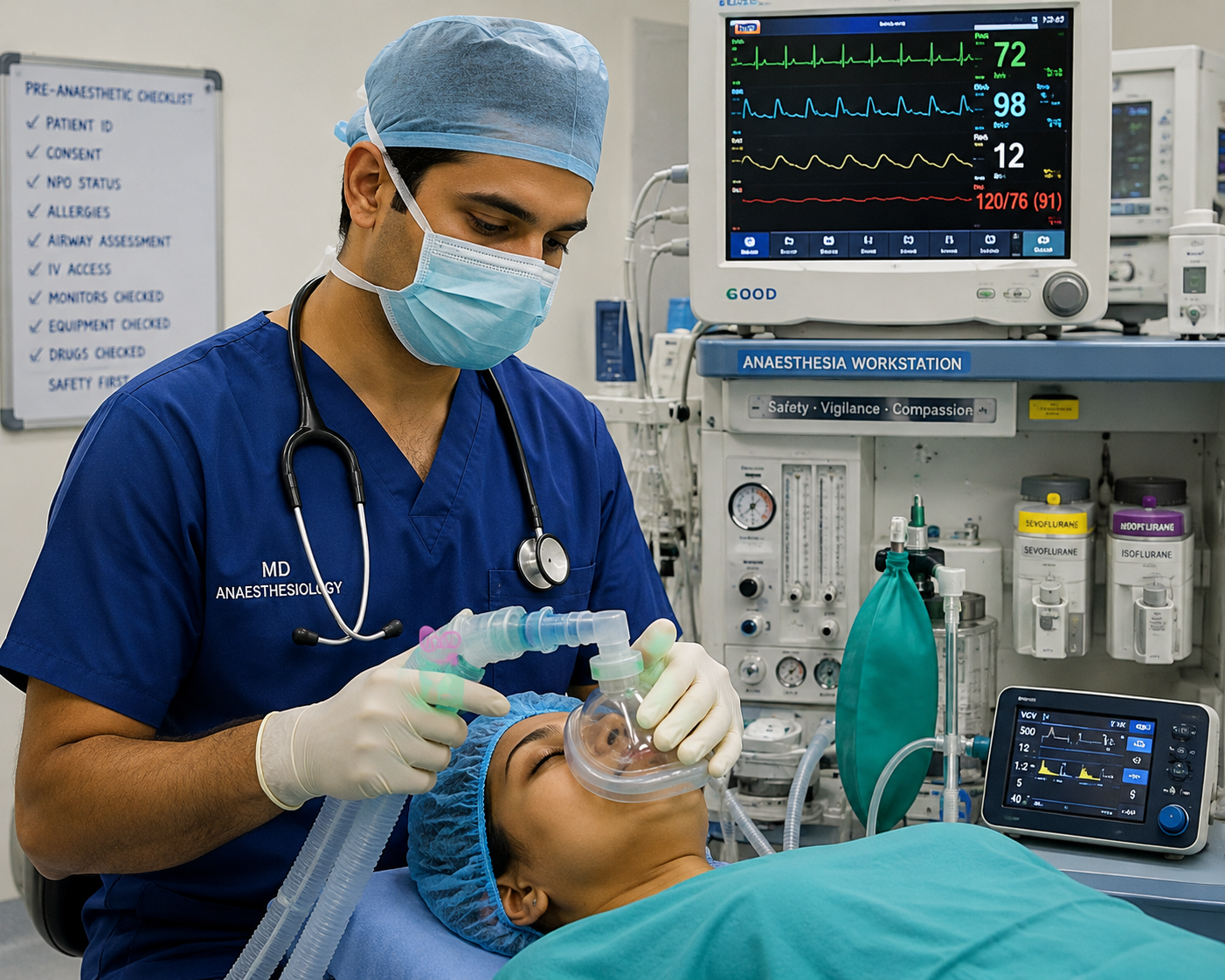
In the modern medical ecosystem, no surgical procedure, trauma intervention, or critical care unit can function without an Anaesthesiologist. With the rapid expansion of corporate hospitals and specialised intensive care units (ICUs) post-pandemic, MD Anaesthesiology has transitioned from a backend support branch to a highly sought-after frontline speciality.
Because government seats for MD Anaesthesiology are limited and fiercely competitive, thousands of candidates turn to the private sector. If you have the financial bandwidth but miss the stringent government cutoffs, Direct MD Anaesthesiology Admission through the Management and NRI quotas provides a highly strategic, legally sanctioned pathway to secure this critical specialisation.
However, a critical legal reality must be established immediately: There is no “backdoor” entry into Indian medical residency. Securing a paid seat requires you to qualify for NEET PG and actively participate in the official Medical Counselling Committee (MCC) or State Directorate of Medical Education (DME) counselling rounds. Any agent promising direct admission outside of this digital portal is offering a fraudulent scheme.
Here is your exhaustive, data-backed guide to navigating the 2026 MD Anaesthesiology admission matrix, complete with verified fee structures, expected ROI, and strict NRI sponsorship strategies.
1. Why MD Anaesthesiology? (ROI and Lifestyle Prioritisation)
When investing heavily in a management quota seat, you must evaluate the long-term Return on Investment (ROI) and lifestyle implications. MD Anaesthesiology offers a unique blend of high adrenaline in the operating room and highly scalable financial models.
-
The Freelance Consultant Model: Unlike physicians or surgeons who are tethered to a single clinic to build a patient base, Anaesthesiologists can work as visiting consultants across multiple private nursing homes and corporate hospitals simultaneously. This “pay-per-case” freelance model allows for massive, immediate scalability.
-
The Critical Care Boom: Modern Anaesthesiologists do not just put patients to sleep; they are the primary intensivists managing the ICU. This dual capability makes them indispensable to hospital administrations.
-
Expected Starting Salary (Post-PG): ₹1.5 Lakhs to ₹2.5 Lakhs per month in corporate setups. Freelance consultants in Tier-1 cities easily scale to ₹3 Lakhs+ per month based on their surgical volume.
-
Prioritization Insight: If you want the thrill of acute patient care, trauma management, and the operating theater—but do not want the lifelong burden of running an OPD clinic or dealing with chronic patient follow-ups—Anaesthesiology is the perfect strategic choice.
2. The Seat Matrix: Deemed Universities vs. State Private Colleges
To execute a flawless choice-filling strategy, you need to understand where the paid seats are located and who controls their allocation.
A. Deemed Universities (100% All India Access)
-
Counseling Authority: Medical Counselling Committee (MCC) via
mcc.nic.in. -
Access: Open to all NEET PG qualified students across India. State domicile is completely irrelevant.
-
Quota Split: 85% Management Quota / 15% NRI Quota.
-
Strategic Advantage: The most transparent admission process. Because Anaesthesiology is technically a support branch, the management fees in Deemed Universities are significantly lower than Tier-1 clinical branches like Radiology or Dermatology, making it accessible to candidates with mid-range budgets.
B. State Private Colleges (Domicile Dependent)
-
Counseling Authority: Individual State Directorates of Medical Education (DME).
-
“Open” States: States like Uttar Pradesh, Karnataka, Rajasthan, and Haryana allow non-domicile students from anywhere in India to bid for their management seats. For example, Uttar Pradesh private medical colleges often cap MD Anaesthesiology fees at a highly affordable ₹14 Lakhs to ₹20 Lakhs per year.
-
“Closed” States: States like Maharashtra, Gujarat, and Madhya Pradesh strictly reserve their private college management seats for local domicile students or those who completed their MBBS within that state.
3. Deep-Knowledge Fee Matrix: Top Deemed Universities (2025–2026 Data)
Because Anaesthesiology sits slightly below the core surgical branches in terms of upfront demand, it offers some of the best financial value in the private medical sector. Locking a choice during counselling that aligns with your exact budget is critical, as resigning an allotted seat results in the immediate forfeiture of your ₹2 Lakh security deposit.
Here is the verified fee data for MD Anaesthesiology across major Deemed Universities:
| Deemed University | Estimated Management Fee (Per Year) | Estimated NRI Fee (Per Year) |
| Dr. D.Y. Patil Medical College, Pune | ₹ 35,00,000 | $ 85,000 |
| Hamdard Institute of Medical Sciences, New Delhi | ₹ 25,00,000 | $ 70,000 |
| SBKS Med. Inst. & Research Centre, Vadodara | ₹ 22,55,000 | $ 60,000 |
| Kasturba Medical College (KMC), Manipal | ₹ 21,88,000 | $ 54,200 |
| JSS Medical College, Mysore | ₹ 21,50,000 | $ 55,000 |
| Amrita School of Medicine, Kochi / Faridabad | ₹ 20,00,000 | $ 50,000 |
| Subharti Medical College, Meerut (UP State Pvt) | ₹ 14,43,744 | N/A |
Note: Tuition fees are strictly charged for 3 years. KMC Manipal and JSS Mysore offer exceptional clinical exposure at a highly competitive fee (around ₹21.8L/year), making them primary targets during choice filling.
4. Securing MD Anaesthesiology via the NRI Quota
If your NEET PG rank is critically low—meaning you barely qualified the exam—but you have strong international financial backing, the NRI quota guarantees a pathway to premium institutions without facing the brutal management merit list. 15% of all Deemed University seats are ring-fenced for this category.
Strict Sponsorship Rules
The National Medical Commission (NMC) rigidly controls who can sponsor an NRI seat to prevent domestic financial fraud. You cannot be sponsored by a family friend or a distant relative. Acceptable sponsors strictly include a First-Degree Blood Relative:
-
Parents (Father or Mother)
-
Real Siblings (Brother or Sister)
-
Paternal or Maternal Uncle/Aunt (Blood relations only)
-
First Cousins
-
Spouse
Mandatory Documentation for NRI Conversion
Before choice filling begins on the MCC portal, there is a narrow window (usually 3-4 days) to email a comprehensive PDF and convert your nationality status to NRI. Missing this window disqualifies you entirely.
-
Notarised Sponsorship Affidavit: A sworn legal declaration from the sponsor taking full financial responsibility.
-
Embassy Certificate: Issued by the Indian Consulate in the sponsor’s country of residence.
-
Family Tree Document: A legal affidavit mapping the exact blood lineage between you and the sponsor.
-
Financial Proof: The massive tuition fees must be wired directly from the sponsor’s NRE/NRO bank account in USD or equivalent converted INR.
5. The Step-by-Step Direct Admission Counselling Process
Do not let agents hijack your counselling portal. The mechanism is entirely digital, transparent, and strictly time-bound.
6. Expert Insights: The Hidden Costs of Anaesthesiology Residency
Evaluating the yearly tuition fee is just the starting point. Before finalising your choices, you must factor in the structural costs of private residency:
| Financial Factor | Impact on MD Candidates |
| Hostel & Mess Fees | Residency is a 24/7 job. Living on campus is strictly mandatory. Institutional hostel fees range from ₹1.5 Lakhs to ₹3.5 Lakhs annually. |
| Stipend Deductions | While government residents earn up to ₹1.2 Lakhs/month, Deemed and Private universities often pay heavily reduced stipends (₹30,000 – ₹60,000/month) or practically zero for NRI candidates. Factor this loss of income into your ROI. |
| The Bank Guarantee Trap | Many private colleges demand a Bank Guarantee for the remaining two years of fees at the time of admission. You must pledge liquid assets or property equivalent to ₹45 Lakhs to ₹70 Lakhs to the bank to secure this guarantee. |
| Seat Leaving Penalties | Resigning an MD Anaesthesiology seat midway triggers a severe penalty bond. In Deemed universities, this legally obligates you to pay the entire 3-year course fee before they release your original MBBS certificates. |
Navigating the NEET PG 2026 admission matrix for MD Anaesthesiology requires strategic precision. A single error in evaluating a state’s open status, misformatting an NRI embassy certificate, or locking a choice without understanding the bank guarantee requirements can derail your career.
Ensure your entire counselling flow—from Round 1 choice filling to Mop-Up round strategy—is mathematically optimised for your exact budget, rank, and preferred clinical exposure.